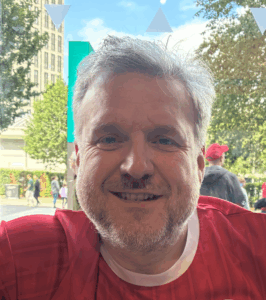
 Stuart is an integrative therapist whose work centres on grief and men’s mental health. Alongside his part-time role with AMPARO, he supports adults in private practice across Manchester and online.
He writes about grief and emotional life, and is currently completing two books exploring how people make sense of themselves through loss, change and the moments that reshape their lives.
Through both his therapeutic work and his writing, Stuart focuses on steady, compassionate support that helps people feel less alone and more understood.
We spoke with him about what this work means to him and what he has learned from supporting people after suicide.
1. What first inspired you to work with Amparo?
I was drawn to this work because suicide bereavement asks for a steady and genuine presence, and that has become central to how I work as a therapist. My experience with men and with neurodivergent clients has shown me how to meet people when they feel overwhelmed or unsure where to begin, and how to help them feel grounded enough to take the next step. My work with Amparo gives me the space to bring that approach into moments where clarity, compassion and patience really matter. It felt like a natural progression for me, because at the heart of the role is simply being human with someone at the hardest moment of their life and offering connection that feels safe and real. This kind of work really matters to me, and it continues to shape not only how I support others but also how I reflect, learn and grow as a therapist and as a person.
2. What keeps you passionate about supporting people at such a vulnerable point in their lives?
What keeps me committed is the privilege of being invited into someone’s story right at the point where everything feels shaken and unreal. People sit with emotions that feel too big to name and with practical questions they never expected to face. I have spent years supporting men who feel they must be strong and neurodivergent clients who have often felt misunderstood or overlooked, and this has shaped the way I listen and respond. My work with Amparo allows me to use that experience in a very real way, offering a calm, grounded presence and helping people make sense of things that feel impossible to put into words. It feels meaningful every single day.
3. What moments or interactions best capture what it means to support someone bereaved by suicide?
For me it is the small moments that show the depth of the work. The pause before someone says the name of the person they lost. The moment a man who has been holding everything together realises he does not need to do that with me. The relief someone feels when they understand they are not being judged for their thoughts or feelings. My work with Amparo gives me the space to bring my therapeutic experience into these conversations and to help people speak about things they have kept locked away. These moments remind me that support is not about fixing anything. It is about showing up with steadiness, care and genuine human connection.
4. From your perspective, what makes suicide bereavement uniquely complex, and what emotions or experiences do people often struggle to put into words?
Suicide bereavement brings so many layers that people rarely feel prepared for. Grief sits alongside shock, guilt, confusion, anger and sometimes shame. People ask themselves questions they never imagined they would face, such as whether they should have seen something or whether they could have stopped it. There is also the sense of stigma that can silence people or make them hold their feelings very tightly. For neurodivergent people this can feel even sharper because the mind searches for logic and clear answers when none exist. My role is to help people make sense of the emotions they do have and to reassure them that it is completely understandable to feel lost or conflicted. Nothing about suicide bereavement is simple, but people do not have to navigate that complexity alone.
5. In the early days and weeks after a suicide loss, what common challenges or questions do you see people grappling with?
In the first days and weeks, people often feel as though they are being pulled in two directions. Emotionally they may feel overwhelmed, numb or unable to make sense of anything. At the same time they are drawn into practical processes that feel unfamiliar and frightening, including contact with the police, coroners and the early steps of the inquest. Families can feel pressure to make decisions before they are ready. Many people worry about how others will react or judge them, and men in particular sometimes feel they need to stay strong for everyone else. My work with Amparo gives me the chance to slow everything down and help people breathe through these moments, one step at a time.
6. Where do you feel specialist services like Amparo make the biggest difference, and what changes do you notice in people as they move through their support journey?
Specialist support offers something people do not always get elsewhere, which is a calm and informed companion at a time when they feel most alone. What I notice is not dramatic transformation but subtle, human shifts that carry enormous meaning. People begin blaming themselves less. They speak more openly about the person they have lost. They ask questions they were too frightened to ask at the beginning. They start to trust their own emotional process. My work with Amparo allows me to walk with people through these changes and to help them feel steadier as they begin to understand their grief and navigate the practical challenges ahead of them.
7. You also write thoughtfully about mental health. What moved you to share your reflections publicly, and what do you hope people gain from reading your work?
Writing began as a way for me to make sense of the experiences people shared with me and to explore the emotional worlds that often remain hidden. It helps me slow down and look closely at the details of grief, identity, men’s emotional lives and neurodiversity, and to express them in a way that feels accessible and human. What I hope readers gain is a sense that their feelings make sense, even when life feels chaotic or overwhelming. Through my writing I want people to feel recognised, reassured and less alone, especially if they are navigating something they have never spoken about before.
8. How does your writing feed into or shape the way you support people who are grieving following a suicide?
Writing strengthens the way I support people because it teaches me to listen more deeply. When you spend time reflecting on themes like grief, loss, masculinity and neurodiversity, you start to notice the quieter parts of a person’s story, such as the moments they pause, the feelings they struggle to name and the places where their voice softens. That awareness carries directly into my work with Amparo. It helps me stay patient, grounded and open to whatever someone brings. Writing keeps my practice reflective and alive, and I hope it helps the people I support feel truly seen and understood.
9. If you could offer one piece of advice or reassurance to frontline professionals or even to the wider public about supporting someone after a suicide, what would it be?
The most helpful thing you can offer is a steady human presence. You do not need the perfect words and you do not need answers. Sometimes the kindest thing you can do is sit with someone in their pain without rushing them, steering them or filling every silence. People remember how safe they felt with you, not what you said. If you can listen with patience, compassion and a willingness to be alongside them rather than ahead of them, you are already offering something powerful.
10. Looking ahead, what positive changes would you like to see in how society talks about grief, suicide bereavement and mental health more generally?
I would like us to talk about grief more openly and more honestly, without judgement or expectation. One of the difficulties is that most people only have experience of grief through three lenses, which are age, illness or accidents. Suicide is rarely spoken about and often carries a sense of silence or stigma that leaves people unsure how to grieve or even whether their reactions are acceptable. We need to remove that stigma and help people understand that grief after suicide is complex, valid and deeply human. Suicide bereavement in particular needs space where people can speak freely about the mixture of emotions they may be carrying. I would like men to feel able to talk about their emotional lives without fear of being misunderstood, and I would like neurodivergent people to be supported in a way that respects the way they process information and emotion. If society can create that kind of understanding and compassion, people will feel less alone and more able to seek help when they need it.
11. Finally, from your experience, what practical things can people do to truly support someone affected by suicide loss?
Keep it simple and human. Listen without trying to fix anything and use the person’s name if the person you are supporting wants to hear it. If they feel able, let them talk about the person they are grieving and allow them to lead the way in how much they want to share. Offer small, practical acts of help such as company at appointments, lifts, childcare or help with paperwork. These simple things often mean far more than people realise. Check in gently and consistently, even months down the line when others may have stepped back. Grief does not follow the rhythm of anniversaries, funerals or expected milestones, so try not to be someone who is only present for the main events. The quieter weeks can be the hardest. Most importantly, let the grieving person set the pace. When someone knows they do not have to carry their loss alone, something inside them begins to settle.